
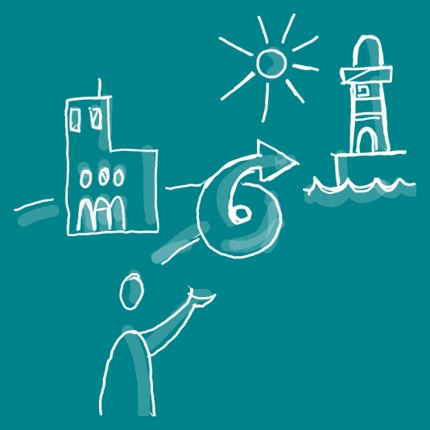
Change as an experiential process within systems
I support organizations and individuals in gaining clarity about what limits their development and functioning –
in order to open new perspectives and enable meaningful change to emerge.
I work with organizations, teams, leadership constellations, as well as individual development and change processes. This may involve addressing concrete challenges,
moving out of unsatisfying or stuck situations, or developing and implementing shared visions of the future.
It is important to me that the process does not end with a jointly developed target image. Rather, this becomes the starting point for the
actual process of change.
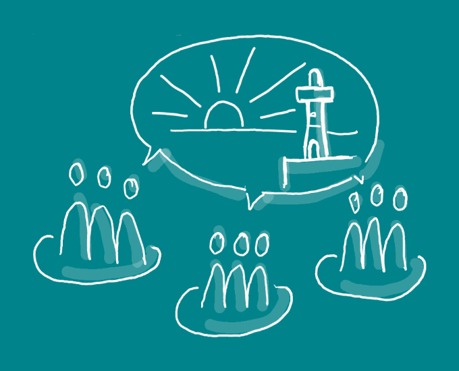
Participation as a core principle of my work
Change is only sustainable when the relevant perspectives within the system are involved.
I therefore work in a fundamentally participatory way.
Sustainable solutions do not emerge in small circles, but through the conscious inclusion of those who are affected by a topic – directly or indirectly.
At the beginning of each process, a systemic clarification takes place:
- Who is affected by the topic?
- Who influences it directly or indirectly?
- Which perspectives, interests, and experiences need to be included in the process?
In individual settings, these perspectives are also explored – even though the relevant people are not actively involved in the process itself.
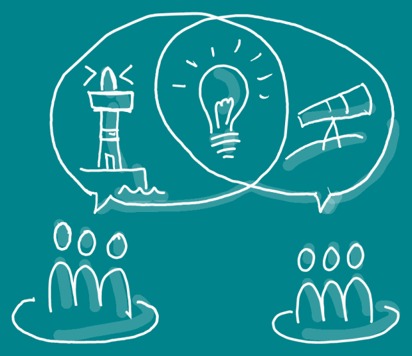
The process space
In my work, I consciously move between different poles:
- structure and openness
- analysis and intuition
- clarity and exploration
- appreciation and confrontation
- reflection and development
This movement creates a working space that is both clear and open – and in which new perspectives are often not “produced”, but emerge.
- complex interconnections become visible
- different perspectives can coexist
- new possibilities are not only thought, but tested in experience
Every change process is different
Some topics take time, others develop a surprising momentum. Some steps repeat, others emerge only through the process itself. I therefore do not understand change as a linear sequence, but as a living process. And yet, many change processes show similar inner movements. They flow into one another, overlap, and may repeat throughout the process.
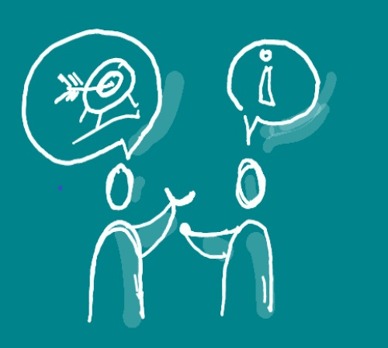
1. Perceiving & understanding
At the beginning, there is often a desire for change – combined with the sense that what has worked so far is no longer sufficient.
Before sustainable solutions can emerge, there needs to be a shared understanding of what is actually at work within the system. Together, we look at existing dynamics,
recurring patterns, tensions, and at what may have been felt for a long time but not yet made visible.
This may also include what is commonly referred to as the “elephant in the room” – topics that everyone knows exist, but that are rarely spoken about openly.
It sometimes takes courage to look at what feels uncomfortable. My experience is that precisely where uncertainty, conflict, or pain becomes visible, key impulses
for development often emerge. Once the function of these dynamics within the system becomes understandable, new pathways for solutions can open up.
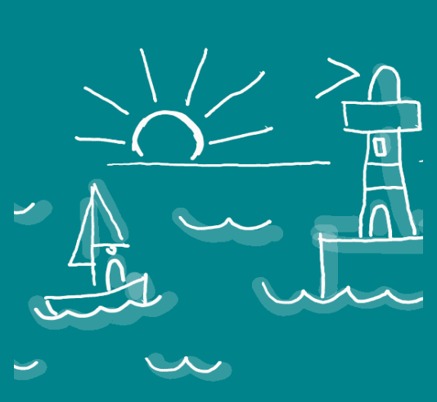
2. Opening and shaping the future space
Once it becomes clearer what moves the system, a new space often emerges almost naturally.
A space in which people begin to imagine how collaboration, leadership, or organization could also look.
To open this field of exploration and co-create viable images of the future, I draw on a range of approaches, including:
- systemic process facilitation
- visual and creative methods
- systemic sculpting and spatial interventions
- structured dialogue and participatory group formats
- nature as a space for reflection and resonance
These are not off-the-shelf solutions or abstract designs. Rather, shared perspectives emerge about what might become possible – grounded in the experiences, needs, and perspectives of the people within the system. Often, not only new ideas emerge, but also new connections between people, topics, and possibilities. People experience themselves again as part of a larger whole.

3. Moving into action & enabling development
A jointly developed vision of the future is not an endpoint.
It is more like a compass for the path that begins now.
The question then becomes whether change finds its way into everyday practice: which new patterns emerge, where old habits regain strength,
where support is needed, and where the organization begins to evolve from its own momentum.
My role shifts in this phase. I step back from providing direction and focus more on accompanying the process, making feedback loops visible,
and continuously reconnecting development with the shared vision.
Over time, people increasingly take over this role themselves. Sustainable change does not emerge because someone continuously accompanies it,
but because it becomes part of how people work together. It becomes a natural part of everyday life.